

A major US research project is entering a new phase, following nearly 55,000 dogs to investigate how genetics, nutrition and everyday environments influence canine aging.
What if the secret to helping dogs live longer and healthier lives could be found by studying thousands of family pets across America?
That is exactly what researchers behind the Dog Aging Project are hoping to discover.
The nationwide research initiative, involving scientists from institutions including Texas A&M University and Tufts University, is moving into its next five-year phase with new support from the US National Institutes of Health (NIH). The project aims to understand why some dogs remain healthy well into old age while others develop age-related health problems much earlier.

According to a report published on November 5, 2026, the project has enrolled nearly 55,000 companion dogs, creating a valuable opportunity to study canine aging on a much larger scale.
Why Are Some Dogs Healthier as They Get Older?
Every dog ages differently. Some senior dogs continue enjoying long walks, playing with their favourite toys and exploring the garden, while others begin experiencing mobility problems, memory changes or chronic illnesses.
Researchers want to understand what makes the difference.
The Dog Aging Project investigates several important factors, including:
- Genetics: Could certain inherited characteristics help some dogs stay healthier for longer?
- Nutrition: How do different diets and eating habits influence long-term health?
- Physical activity: Does a dog’s activity level throughout life affect how well it ages?
- Environment: Could everyday exposure to chemicals, pollution and other environmental factors influence canine health?
- Cognitive health: Why do some older dogs experience changes in memory and behaviour while others remain mentally active?
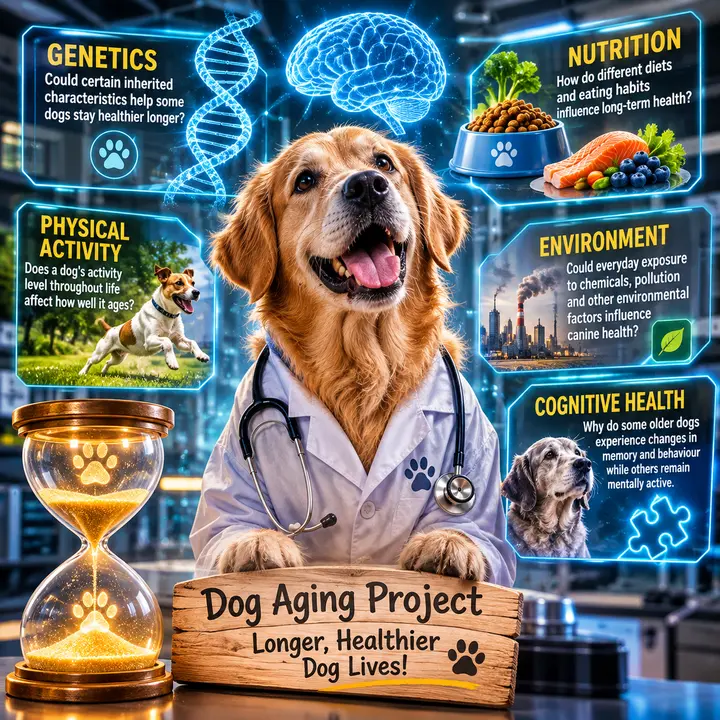
By following the same dogs over several years, scientists hope to identify patterns that would be difficult to discover through short-term studies.
Researchers Will Look Beyond Genetics
One particularly interesting part of the next research phase is the closer examination of dogs’ everyday environments.
Researchers plan to collect drinking-water samples, use special tags that absorb chemicals from the air and equip a selected group of dogs with activity trackers.
This could help scientists investigate how environmental exposures and daily activity are associated with long-term health.

The project will also continue examining nutrition and genetic differences. Researchers are particularly interested in understanding why dogs with similar genetic risks can experience very different health outcomes.
In other words, a dog’s genes may tell only part of the story. Its lifestyle and surroundings could also matter.
What Does This Mean for Dog Owners?
Although the research is still ongoing, there are already some practical lessons worth remembering.
Dog owners cannot change their pets’ genetic background, but they can make everyday choices that support their wellbeing.
Here are a few important habits to consider:
1. Maintain a healthy body weight
Excess weight can put additional stress on a dog’s joints and overall health. Ask your veterinarian what a healthy weight looks like for your dog’s breed, age and size.
2. Choose appropriate dog food
A balanced diet that meets your dog’s nutritional needs is an important part of long-term care. Puppies, adult dogs and senior dogs may have different nutritional requirements.
3. Keep your dog physically active
Regular walks, suitable exercise and age-appropriate activities can help support mobility and general wellbeing.
4. Keep your dog’s mind active
Interactive dog toys, puzzle feeders, scent games and positive training activities can provide mental stimulation. Older dogs can benefit from gentle activities suited to their abilities.
5. Don’t skip veterinary check-ups
Regular veterinary visits can help identify changes in weight, mobility, behaviour and general health before they become more serious problems.
Can This Research Help Humans Too?
Interestingly, the Dog Aging Project is not only about dogs.
Because companion dogs share many aspects of their daily environment with humans, studying how they age could also provide useful insights into human aging.
Dogs experience many age-related diseases that are also seen in people. However, dogs generally move through different life stages much faster than humans, allowing researchers to observe changes over a shorter period.
The scientists hope that understanding why some dogs age more successfully could eventually contribute to research into healthier aging in people as well.
A Little Comfort and Play Go a Long Way
A happy, healthy dog needs more than good food and regular walks. Comfortable dog beds give our furry friends a cosy place to rest and recover after a day full of adventures, while interactive dog toys, chew toys and puzzle toys keep their minds busy and boredom away.
Quick Tip: Can a Dog Bed Improve Appetite?
As dogs get older, choosing supportive dog beds and age-appropriate toys can make everyday life more comfortable and enjoyable. After all, every dog deserves a soft place to dream and a fun toy to chase!
Quick Tip: The Ultimate Dog Toy Guide (2026)
Research source: Dog Aging Project, Texas A&M University College of Veterinary Medicine & Biomedical Sciences. The project is supported by the US National Institute on Aging, part of the National Institutes of Health.