
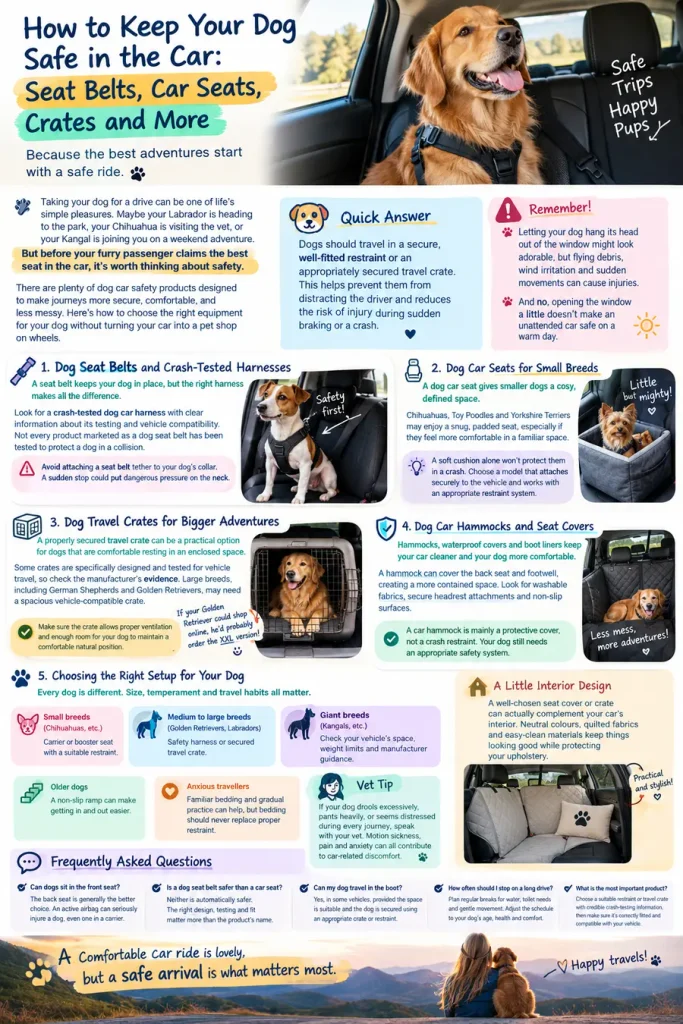
Taking your dog for a drive can be one of life’s simple pleasures. Maybe your Labrador is heading to the park, your Chihuahua is visiting the vet, or your Kangal is joining you on a weekend adventure. But before your furry passenger claims the best seat in the car, it’s worth thinking about safety.
The good news? There are plenty of dog car safety products designed to make journeys more secure, comfortable, and less messy. Here’s how to choose the right equipment without turning your car into a pet shop on wheels!
💡 Quick Answer: Dogs should travel in a properly secured, suitable restraint or a vehicle-compatible travel crate. The right setup helps prevent driver distraction and can reduce the risk of injury during sudden braking or a collision.
🚗 Why Dogs Need Proper Car Safety Equipment
Even a calm dog can become startled by a loud horn or an unexpected movement. An excited dog might try to climb into the front seat, while a nervous one may pace around looking for reassurance. Neither is ideal when you’re trying to concentrate on the road.
Letting your dog hang its head out of the window might look adorable, but flying debris, wind irritation, and sudden movements can cause injuries.
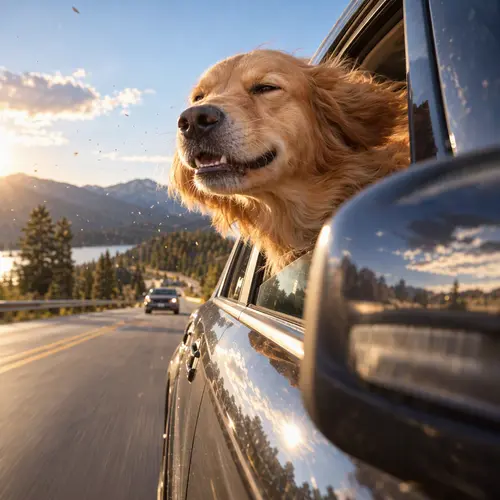
Remember: Opening the window a little doesn’t make an unattended car safe on a warm day. Temperatures inside a parked vehicle can rise dangerously quickly.
🦺 1. Dog Seat Belts and Crash-Tested Harnesses
A dog seat belt attaches to a suitable harness and helps keep your pet in place. Some are simple adjustable tethers, while others are designed to work with specialised vehicle safety harnesses.
Look for a crash-tested dog car harness with clear information about its testing and vehicle compatibility. Not every product marketed as a dog seat belt has been tested to protect a dog in a collision.
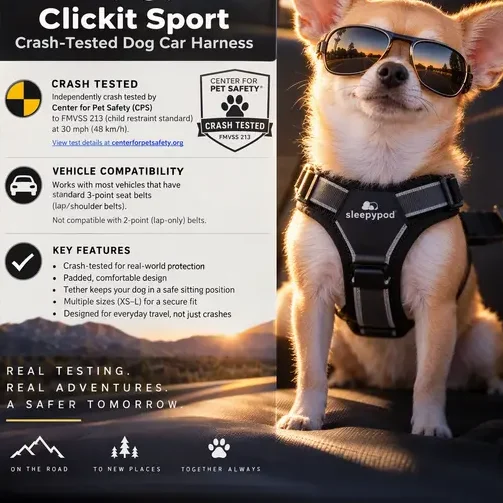
⚠️ Safety tip: Never attach a seat belt tether to your dog’s collar. A sudden stop could put dangerous pressure on the neck. A properly fitted harness designed for vehicle travel is a better choice.
🐕 2. Dog Car Seats for Small Breeds
A dog car seat can give smaller dogs a cosy, defined space. Booster seats may also help little passengers see out of the window without climbing onto your lap.
Chihuahuas, Toy Poodles, and Yorkshire Terriers may enjoy a snug, padded seat, especially if they feel more comfortable in a familiar space. However, a soft cushion alone won’t protect them in a crash.
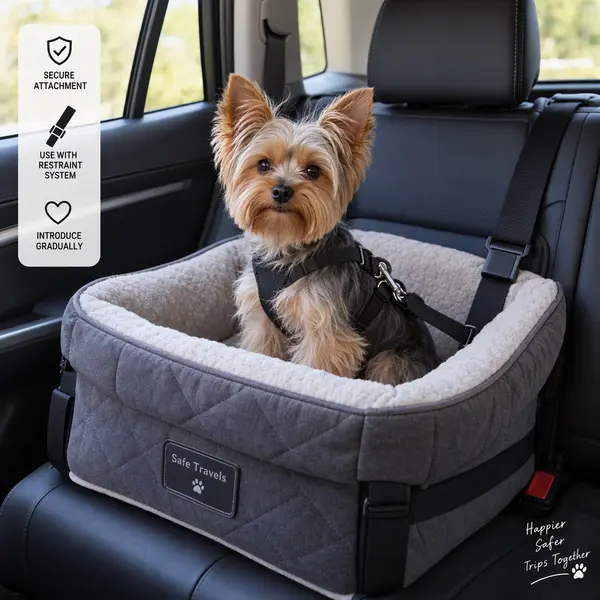
Choose a model that attaches securely to the vehicle and works with an appropriate restraint system. If your dog is anxious, introduce the seat gradually at home before trying it on a longer drive.
📦 3. Dog Travel Crates for Bigger Adventures
A properly secured travel crate can be a practical option for dogs that are comfortable resting in an enclosed space. Some crates are specifically designed and tested for vehicle travel, so check the manufacturer’s evidence rather than assuming every sturdy-looking cage is crash-safe.
Large breeds, including German Shepherds and Golden Retrievers, may need a spacious, vehicle-compatible crate.
If your Golden Retriever could shop online, he’d probably buy the XXL version! 😄
Make sure the crate allows appropriate ventilation and enough room for your dog to maintain a comfortable natural position. Never place a crate where it could interfere with airbags or become a loose projectile.
🧼 4. Dog Car Hammocks and Seat Covers
Dog car hammocks, waterproof seat covers, and boot liners are brilliant for keeping muddy paws and loose fur off your upholstery.

A hammock can cover the back seat and footwell, creating a more contained space. Look for washable fabrics, secure headrest attachments, and non-slip surfaces.
✨ A little interior design tip: A neutral, quilted cover can complement your car’s interior while saving you from finding half a forest in the upholstery after a countryside walk.
Just remember, a car hammock is mainly a protective cover, not a crash restraint. Your dog still needs an appropriate safety system.
🐾 5. Choosing the Right Setup for Your Dog
Every dog is different. Size, temperament, mobility, and travel habits all matter when choosing car safety equipment.
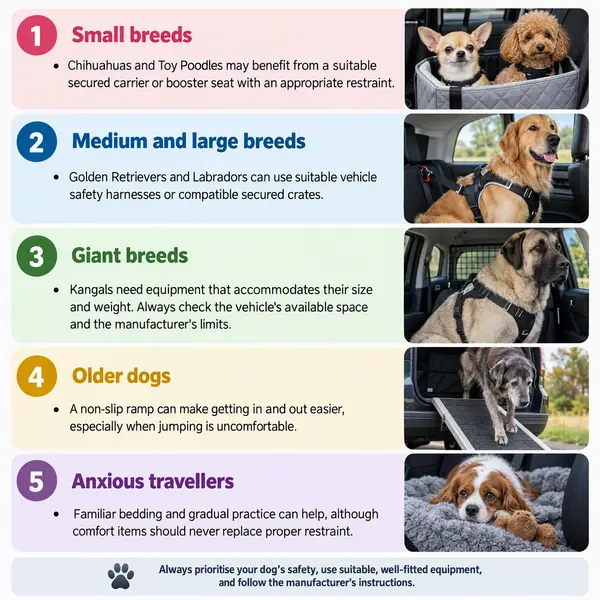
Every dog has different travel needs. A tiny Chihuahua, a powerful Kangal and a senior Labrador won’t necessarily feel comfortable or fit safely in the same car restraint. The best setup depends on your dog’s size, weight, temperament, mobility and the type of vehicle you drive.
- Small breeds: Chihuahuas, Yorkshire Terriers and Toy Poodles may feel more secure in a properly secured carrier or a suitable booster seat. Choose a model that attaches firmly to the vehicle and includes a compatible restraint system. Remember, a soft cushion or raised seat alone will not protect your dog in a collision.
- Medium and large breeds: Golden Retrievers, Labradors and German Shepherds generally need a crash-tested harness designed for their size or a suitably sized crate that can be secured according to the manufacturer’s instructions. Make sure your dog can sit, stand and lie down comfortably without excessive movement that could compromise safety.
- Giant breeds: Kangals, Great Danes and other giant dogs need equipment designed for their considerable weight and body dimensions. Before buying a crate or restraint, measure your dog and check the product’s weight limits, dimensions and vehicle compatibility. You should also consider the available boot or rear-seat space, since a crate that fits in your home may not fit safely in your car.
- Puppies: Young dogs need a secure travel setup that accommodates their growth. A properly secured carrier or suitable restraint can help prevent them from climbing around the cabin or distracting the driver. Check the fit regularly as your puppy grows, and introduce car journeys gradually with short, positive trips.
- Senior dogs and dogs with mobility problems: Older dogs may struggle with high vehicle entrances, slippery surfaces or jumping onto seats. A sturdy, non-slip pet ramp can make getting in and out easier and reduce unnecessary strain. Choose a restraint that fits comfortably without restricting breathing or aggravating sensitive joints.
- Anxious travellers: Dogs that whine, tremble or pace during car journeys may benefit from gradual training and familiar bedding. Let your dog explore the carrier or car seat at home first, reward calm behaviour and begin with short drives. Familiar scents can provide comfort, but bedding and toys should never replace a proper restraint or interfere with safe positioning.
- Active and strong dogs: Breeds that pull hard or become excited around new sights need equipment that fits securely and is appropriate for their strength. Avoid relying on an ordinary walking harness or a generic seat-belt attachment unless it is specifically suitable for vehicle travel and has credible safety-testing information.
The golden rule: Choose car safety equipment based on verified testing, correct fit and compatibility with your vehicle, not just your dog’s breed or the product’s marketing claims. No restraint can guarantee injury prevention in every crash, so always secure your dog appropriately and keep them away from the driver’s area.
❤️ What If Your Dog Hates Car Rides?
Some dogs associate car journeys with stressful vet visits. Others may experience motion sickness or feel unsettled by unfamiliar sounds and movement.
Start with short, positive sessions in a stationary car, rewarding calm behaviour. Gradually build up to short drives when your dog seems comfortable.
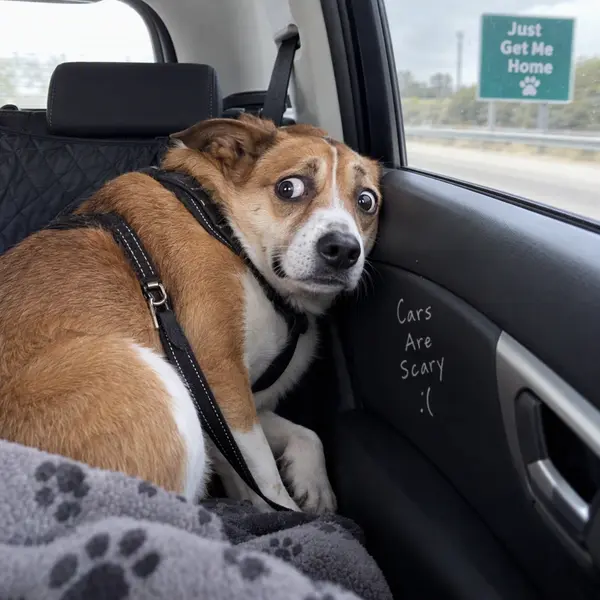
Vet tip: If your dog drools excessively, pants heavily, vomits, or seems distressed during every journey, speak with your veterinarian. Motion sickness, pain, and anxiety can all contribute to car-related discomfort.cb
❓ Frequently Asked Questions
Can dogs sit in the front seat?
The back seat is generally the better choice. An active passenger airbag can seriously injure a dog, even one sitting in a carrier. Follow your vehicle and restraint manufacturer’s instructions.
Is a dog seat belt safer than a car seat?
Neither is automatically safer. A well-designed, appropriately tested restraint system matters more than the product’s name or appearance.
Can my dog travel in the boot?
Yes, in some vehicles, provided the space is suitable and the dog is secured using an appropriate vehicle-compatible crate or restraint. A loose dog in the boot isn’t protected simply because it’s separated from the passengers.
How often should I stop on a long drive?
Plan regular breaks for water, toilet needs, and gentle movement. Adjust the schedule to your dog’s age, health, and comfort, and never leave your dog alone in a hot car.
What is the most important dog car safety product?
Choose a suitable restraint or travel crate with credible crash-testing information, then make sure it’s correctly fitted and compatible with your vehicle.
Can I use an ordinary walking harness in the car?
Not necessarily. A walking harness may not be designed to withstand collision forces. Choose equipment specifically intended for vehicle travel, and check what testing supports its safety claims.
💛 Safe Travels, Happy Paws!
A comfortable car ride is lovely, but a safe arrival is what matters most. With the right equipment, a little training, and sensible breaks, your dog can enjoy the adventure while you keep your attention where it belongs, on the road. 🐾