

Enjoying a quiet evening, when suddenly your dog starts barking at absolutely nothing. You check the window. Nobody’s there. You check the hallway. Empty. Your dog, meanwhile, is acting like they’ve just discovered a burglar, an alien invasion and a suspicious squirrel all at once. 😂
So, why do dogs bark for no reason at home?
🐾 The short answer: Dogs often bark at home because they hear sounds humans miss, notice movement outside, feel bored or anxious, seek attention, or respond to something in their environment. What seems like random barking to us usually has a trigger, even if we can’t identify it.
Let’s look at what might be happening inside your dog’s head, and how you can make your home a little more peaceful without turning it into a library.
🔊 1. Your Dog Can Hear Things You Can’t
Dogs have remarkably sensitive hearing. A faint sound from the neighbours, footsteps in the corridor, a distant car door or a bird outside may be enough to trigger a barking session.

Windows can make things even more exciting. Your dog might spot a cat crossing the garden, a delivery driver approaching the house, or a leaf blowing past like it’s auditioning for an action movie. 🍂
💡 What helps? If your dog barks at outdoor activity, try closing the curtains, using privacy film on lower windows, or moving their favourite resting spot away from the window. White noise or gentle background music may also help mask some sounds.
🎾 2. Boredom Can Turn Your Dog Into a Full-Time Security Guard
Dogs need more than food, water and a comfortable bed. They also need mental stimulation, exercise and opportunities to explore.
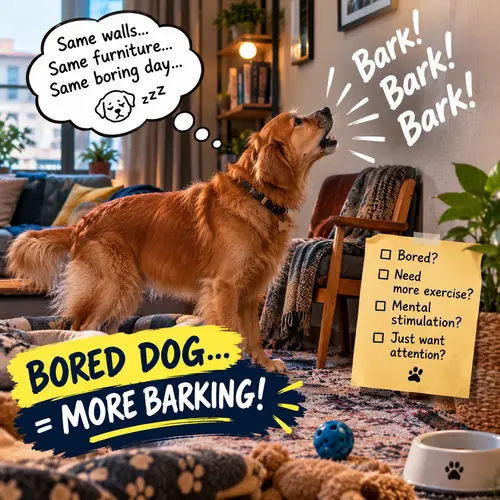
When those needs aren’t met, barking can become an entertaining hobby. Your dog might bark at a wall, a chair, or absolutely nothing you can see because, frankly, the day has been rather uneventful.
🐕 Try this: Add short sniffing walks, food puzzles, scent games and five-minute training sessions to your dog’s routine. Even hiding a few treats around the room can give their brain something more interesting to do than supervise the wallpaper.
Sometimes, the best way to stop a dog from inventing problems is to give them a fun job instead.
💙 3. Anxiety Can Make Ordinary Sounds Feel Threatening
Sometimes barking is less about excitement and more about fear. Dogs may react to unfamiliar noises, separation from their favourite person, changes in routine or stressful experiences.
Watch your dog’s body language. A relaxed, wagging dog may be alerting you to something interesting. A dog that paces, pants, trembles, tucks their tail or repeatedly barks at the same sound may be feeling distressed.

If barking happens mainly when you leave home, separation-related distress could be involved. This isn’t simply your dog being naughty or trying to get revenge because you went to work. ❤️
🌿 What helps? Keep routines predictable, provide a comfortable resting area and introduce changes gradually. If your dog seems genuinely frightened, avoid punishment. It can increase anxiety and make the problem worse.
🐕 4. Some Dogs Are Naturally More Vocal Than Others
Breed tendencies can influence how often dogs bark, although every dog has an individual personality.

- 🐾 Chihuahuas: Small bodies, big opinions. They may bark at unfamiliar people, noises or changes around the home.
- 🦊 Terriers: Many were bred to notice movement and react quickly, so a squirrel outside can become breaking news.
- 🛡️ German Shepherds: Their alert nature may make them quick to announce visitors or unusual sounds.
- 🎵 Beagles: These scent hounds are known for their distinctive vocalisations and may bark or howl when excited.
- 🐶 Golden Retrievers and Labradors: Often sociable and playful, they may bark when excited, bored or eager for attention.
- 🐺 Kangals: These livestock guardian dogs can be naturally watchful and protective, so environmental sounds may trigger alert barking.
Understanding your dog’s breed can help you choose suitable activities and training methods. It doesn’t mean you have to accept constant barking as inevitable.
🏡 5. Your Home Environment Might Be Encouraging Barking
Believe it or not, your interior design can influence your dog’s behaviour.
A dog bed beside a busy front window may create a perfect observation post. Echoes in a hallway can make small sounds seem more dramatic, while a lack of quiet resting areas may leave a sensitive dog feeling constantly on duty.

Create a cosy retreat away from doors and busy windows. A comfortable dog bed, washable blanket and a few safe toys can make the space inviting. If outside movement is the main trigger, rearranging furniture or blocking the lower part of a window may help.
Think of it as interior design for emotional wellbeing. Your dog doesn’t need a designer sofa, but they might appreciate fewer daily squirrel updates. 😂
*Tip: To read our guide about one of the most important things for dogs, dog beds, click here >>> “Dog Bed Types, Sizes & Buying Guide”
🩺 6. When Should You Ask a Veterinarian About Barking?
A sudden change in your dog’s behaviour deserves attention, particularly if a previously quiet dog starts barking frequently or seems unsettled.
Pain, hearing or vision changes, cognitive changes in older dogs, and other medical problems can sometimes affect vocalisation. If barking comes with confusion, unusual restlessness, loss of appetite, aggression or other new symptoms, contact your veterinarian.
A vet can help rule out medical causes. If your dog is healthy but continues to bark excessively, a qualified reward-based trainer or veterinary behaviourist can help identify triggers and build a practical plan.
❓ Frequently Asked Questions
🌙 Why does my dog bark at nothing in the middle of the night?
Your dog may hear distant animals, neighbours, plumbing, or other noises that you barely notice. Night-time can also make sounds seem more prominent because the house is quieter. Check for environmental triggers and look for signs of anxiety.
🐾 Should I ignore my dog when they bark for no reason?
Not always. First, work out why they’re barking. If they need the toilet, feel frightened or are alerting you to something, ignoring them may not help. If barking is used to demand attention, reward calm behaviour rather than giving attention every time they bark.
👻 Do dogs bark because they see ghosts?
There is no reliable scientific evidence that dogs bark at ghosts. Their sharper senses, reactions to subtle movement and sensitivity to sounds are much more plausible explanations.

🎓 Can I train my dog to stop barking indoors?
Yes, you can often reduce unnecessary barking by identifying triggers, teaching a calm response, rewarding quiet behaviour and providing enough exercise and mental stimulation. Avoid shouting, as your dog may interpret it as joining in.
💔 Is excessive barking a sign of stress?
It can be. Repeated barking alongside pacing, panting, trembling, hiding or destructive behaviour may indicate stress or anxiety. Consider veterinary advice if these signs persist.
👀 Why does my dog bark at one particular wall or corner?
Your dog might hear something behind the wall, notice reflections or shadows, or react to a faint smell or movement. If the behaviour is new, repetitive or accompanied by confusion, have your dog checked by a veterinarian.
🐕💚 Final Thoughts: Listen to What Your Dog Is Telling You
When your dog barks at seemingly nothing, they’re not necessarily being difficult. They may be bored, anxious, alert to a sound you can’t hear, or simply responding to their surroundings.
Start by observing when the barking happens, what your dog does immediately beforehand, and how they behave afterwards. Small changes to your routine, training and home environment can make a real difference.
And remember, your dog may believe they’re protecting the entire household from a suspicious leaf. 🍃 Thank them for their enthusiasm, then help them discover that sometimes, the leaf can wait. 🐾